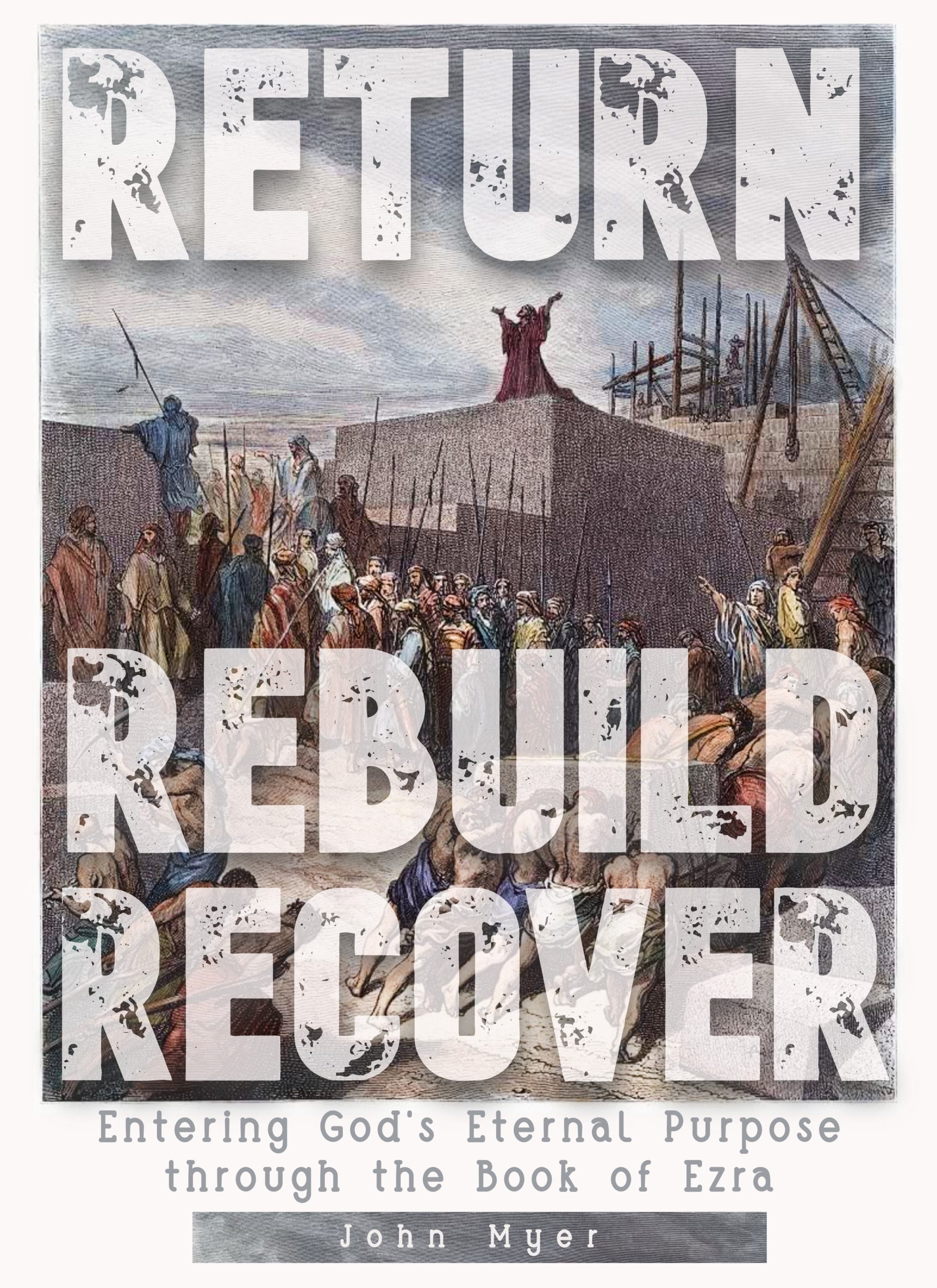
 I’m still only 95% of the way through completion of my first chapter. So in the meantime, I thought I’d say a little something about the book of Ezra, itself. First, it follows the unprecedented loss of the temple of Yahweh, Jerusalem, and the holy land. That’s a pretty clean sweep. You could say the people reaped what they had been sowing for centuries. The crop of judgment finally ripened.
Jeremiah of course, records this event, and the last forty years of prophetic ministry leading up to it. The final chapter of his book slides a magnifying glass over certain particulars of the temple destruction:
“And the pillars of bronze that were in the house of the Lord, and the stands and the bronze sea that were in the house of the Lord, the Chaldeans broke in pieces, and carried all the bronze to Babylon” (52:17).
The two pillars in front of the great house were a testimony of its great judgment upon the world’s pagan darkness. The bronze sea was a giant pool filled with water. It sat upon the images of oxen facing outward to the four corners of the earth, offering a “bath” for all who fall under that judgment. Both pillars and sea vanished into Babylon.
The ability of the house to righteously judge according to Yahweh, and to symbolically wash according to the power of the Holy Spirit, was gone. The temple was thus treated as every other civic structure, and destroyed:
“And he [Nebuzaradan] burned the house of the Lord, and the king’s house and all the houses of Jerusalem; every great house he burned down” (52:13).
But seventy years later, Ezra records the return of Israel through a representative remnant. It was not a proud bunch who came back, boasting of their superior spirituality, but a deeply humbled, repentant group. Their first order of business was to rebuild the temple of God, parallel to recapturing the spiritual dynamic they had lost.
This is the experience we begin to interact with when entering Ezra.