Let’s visit the wardrobe closet of someone who hasn’t gotten an update since the seventies.
Platform shoes (there must be half a tree in those heels).

Bell bottoms (a pair of pants that decided to be a dress from the knee down).

Plaid sport coats (apparently made from 1948 furniture upholstery)

Crocheted ties (it could also double as a potholder in case of an emergency)
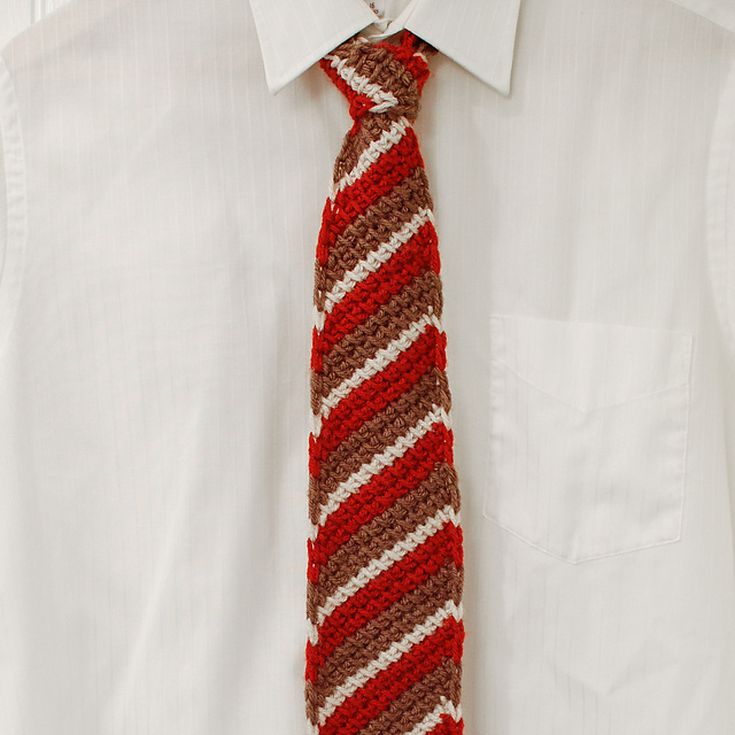
Is this a closet, or a museum?
Let’s ask the same question of millennials who sit down to read the Bible for the first time. What will be their reaction? Because of their cultural programming, many will probably conclude that the scriptures are out of step, dated, old-fashioned, and downright funny-sounding.
This only heightens when they come across the subjects of male leadership in the home and in the church, prohibitions against no-fault divorce, restrictions concerning various sexual “freedoms,” admonitions to self-sacrificial living, radical commitment to the faith community, and seeking first the kingdom of God.
Of course I’m not advocating a return to ceremonial laws that Jesus has fulfilled on the cross. But sometimes even the moral, ethical, and spiritual truths that the Bible considers non-negotiable, can come across like things of yesteryear. It’s as though we pick up our latest model smartphone, open the Bible app to read a little bit, and suddenly encounter an obsolete world of denim pants suits, and rhinestones.
Yet Scripture presents itself as the eternal Word of God. Eternal means not limited by time, always fresh, and remaining relevant forever, regardless of the era in which the reader lives.
Does the Bible need upgrades? Hardly.
Progressive theologians might assume Scripture is a fluid document, but Jesus went in the opposite direction. He said, “Do not think that I have come to abolish the law or the prophets. I have not come to abolish them but to fulfill them. For truly I say to you until Heaven and Earth pass away, not an Iota, not a dot will pass from the law until all is accomplished” (Matt. 5:17-18).
The scriptures were not to be altered. Much to the contrary God’s intention in giving them would be fulfilled to the uttermost.
Having said this, Jesus then doubled down in verse 19 to add, “whoever relaxes one of the least of these commandments and teaches others to do the same, will be called least in the Kingdom of Heaven. But whoever does them and teaches them will be called great in the Kingdom of Heaven.”
That is, whoever relaxes, softens, downplays the scriptures in the name of so-called relevance, will only succeed in losing their relevance in the kingdom of heaven. Man-pleasing always comes at a cost. Harmony with world opinion often means being out of step with the Kingdom of God.
Jesus added in Mark 13:31, “Heaven and earth will pass away, but my words will not pass away.” He also applied this claim to the later ministry of the apostles. Praying to His Father He said, “I have given them the words you gave me” (John 17:20).
A number of times the Jews brought contentious issues to Jesus for His opinion. They were always arguing about matters of dispute, such as the grounds for divorce, and whether resurrection was real. His response in certain cases was simple, as He replied to them, “Have you never read?” In other words, “You boast that the Scriptures are the word of God. Why not believe what they say? Why bring these things to Me, as though the answer doesn’t already exist in writing?” By His reckoning, Scripture should have settled such obvious matters without endless wrangling.
According to Him the Scriptures remain the Word of God, regardless of the transient time in which the reader lives. You cannot abolish them, adjust them, dismantle them, or even nicely downplay them. If the prevailing culture says Scripture is somehow questionable, that simply means the culture is wrong.
When individuals who call themselves Christians don’t follow Jesus into His personal evaluation of the Bible, it’s hard to say they’re actually following Him at all. Scripture describes and invites us into Christ’s glory, work, and purpose, His moral will for man, and His expression of God from eternity past to eternity future. The Christian life is literally made from these things. When we delete them, or even relax them, pretending Scripture is silent on certain issues (when it clearly isn’t), our discipleship will look like Swiss cheese, riddled with holes.
Peter exemplified one who understood what was at stake. He wrote, “All flesh [human works, thoughts, hopes, dreams, plans] is like grass, and all its glory [achievements and inventions] like the flower of grass. The grass withers, and the flower falls, but the word of the Lord remains forever. And this word is the good news that was preached to you” (1 Pet. 1:24-25).
The emphasis lies upon the word remains. After everything else falls apart, the Word continues, indifferent to the numerous changes in human history.
When I was forty-eight years old, we planted Upper Arlington Christian Assembly (now Hilliard Christian Assembly). I felt a little uneasy, because according to the trend I was already fifteen to twenty years past the age of a guy doing this kind of thing. I didn’t want our young church to perceive my ministry as being a wardrobe closet from the 70s. I guess you could call what I was feeling FOI—Fear Of Irrelevance.
A lot of young men who were planting churches at the time had a “look”—skinny jeans, and hip vocabulary. Of course there were also tattoos and tons of bravado. I couldn’t help but feel I would never fit that paradigm. I wondered if our little church with its slightly uncool shepherd would disappear within a year. Over time though, it became clearer to me that I needed to ignore hype, and make sure I continued giving myself to something timeless. I didn’t need to catch up with anybody’s image, or to copy them. I needed to minister to our members the unchangeable truth of Scripture, something timeless that would never get old.
I’m glad I did that. Eventually the fashions of the church planting world at that time became passé. Today some of us still poke fun at each other over the Hawaiian shirts, the Spurgeon beards, grunge fashion, and scarves worn on ninety degree days. These fell away (okay, for some of us it didn’t, but that’s fine). Meanwhile, the scriptures remain.
Don’t become so confident and pickled in the current cultural moment that you forget it’s temporary. All of it has a shelf-life about as long as the milk in your refrigerator.
Abide in something that will outlast this world and continue to bless you right into eternity.
The word. Scripture.
When all else is gone, it remains.
Count on it.