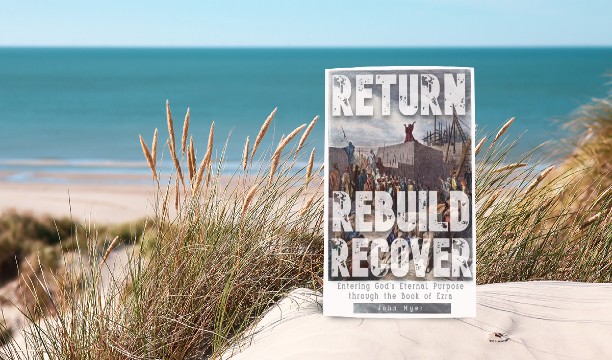
I’ve taken a longer break between chapters three and four of my online book-in-progress, but I’m still working on it (Read chapters 1-3 here). Just as well. I’ve run into some interesting real world situations that demand I slow down to carefully consider what will go into this upcoming chapter.
Like when over a hundred church leaders from the other side of the world want to transition to what they feel better reflects fidelity to the Lord. Many of them have gone so far down a road of fiscal abuse, manipulative theology, fudged miracles, and power hunger, that it’s hard for them to know where to start making changes. Someone asked if they should begin with taking down the denominational signs over the door.
(As if renaming a sick man might cure him).
There are those who will ask if they should leave their churches, in pursuit of a more perfect one.
(As if moving a sick man around the hospital parking lot might cure him).
The more immediate requirement will always be a thorough, inward housecleaning.
But, a return to building up the church, even though it must be eminently spiritual, needs to transition into practical measures somewhere along the way. There has to be a point, just like in Ezra chapter 1, where people get up and go. They make plans, gather stuff together, and put wheels on their prayers.
“Then rose up the heads of the fathers’ houses of Judah and Benjamin, and the priests and the Levites, everyone whose spirit God had stirred to go up to rebuild the house of the Lord that is in Jerusalem. And all who were about them aided them with vessels of silver, with gold, with goods, with beasts, and with costly wares, besides all that was freely offered” (vv. 5-6).
These people of God hadn’t read the prophecies of a return to the holy land in Isaiah and Jeremiah just for inspirational value. Along with their hearts and heads, they added hands, and feet.
Likewise, when New Testament folks get serious about revivals that lead to church health, plenty of practical issues will emerge that also need attention. When my scary foray into church planting began many years ago, our team read books by those who had done it, because we finally had to ask how to go about looking for a meeting place on a shoestring budget. Did we need a website? Better chairs than the metal folding variety?
For some of us who really love deep spiritual concepts, these moments of practical clarity never seem to arrive. We spoke to a couple of failed church planters, who had magnificent success at first, but whose churches then imploded. “Please,” one of them told us, “Talk to your people about money as soon as you can.”
Apparently, they had had a handful of great months talking about the glory of Christ, and walking in the Spirit. But when the first bill for their rental space came along, the members were at odds over how to pay it.
“We all need to pitch in!” the leaders said.
“Can’t afford to give!” the members replied.
Practical challenges mounted.
Church over.
I’m a huge proponent of inner life and spiritual health–critical factors for building or rebuilding the church. But if the church becomes fruitful, and numbers increase, service teams will be needed, so leaders don’t get burned out. And rotations, so the teams don’t get burned out. Ever tried to schedule volunteers four months out? It never works perfectly in real life like it does on paper. How about followup for new people? Is there a plan? Should there be? What happens when new folks appear, but continue to inhabit a twilight zone where they have negligible commitment levels?
At this point, practical considerations have come calling, and we’ll need more than a good heart. Like a good head. Hands that work. Feet that go. The point is, the church is not just some kind of ethereal thing. It’s made up of people who have kids. And marriages that frequently need support. And folks who work demanding schedules.
Nothing much there is ideal.
But that is precisely the setting in which Christ chooses to place Himself.